This post is part of our Ten Years of the WPHP Spotlight Series, which will run through August 2026. In May 2026, the WPHP held two wrap events to celebrate over a decade of collaborative data creation and research, showcasing some of the projects that have emerged in the process. This series shares these projects along with further reflections from the creators and researchers.
Authored by: Salena Wiener
Edited by: Kate Moffatt and Michelle Levy
Submitted on: 08/19/2026
Citation: Wiener, Salena. "Ten Years of the WPHP: Earth Love Curator's Tour." The Women's Print History Project, 19 August 2026, https://womensprinthistoryproject.com/blog/post/156.
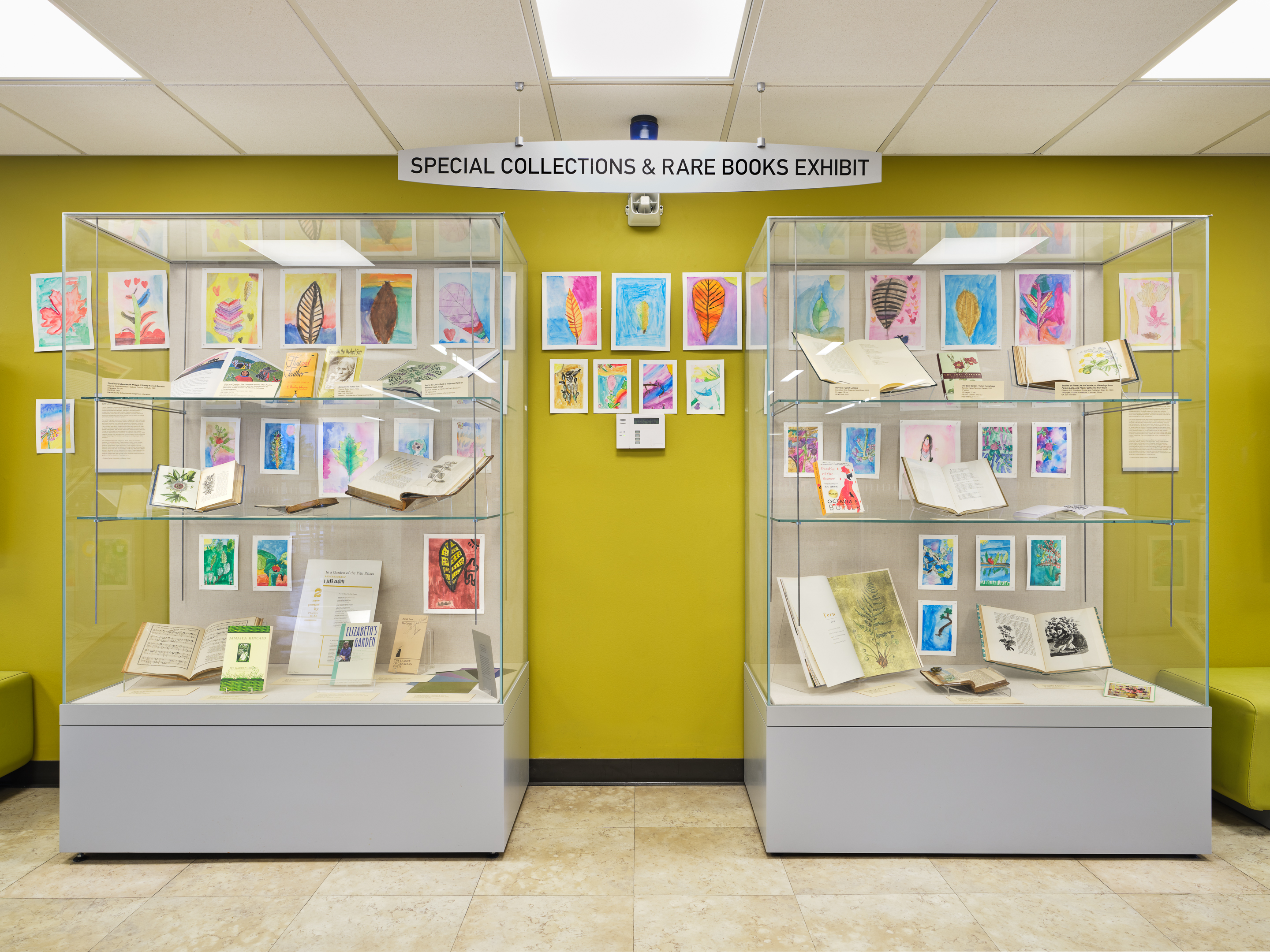
Dr. Denise Oleksijczuk and PhD student and WPHP Research Assistant Salena Wiener curated the Special Collections and Rare Books exhibit Earth Love: Intended Chiefly for Young Persons, which was on display on the 3rd floor of the Bennett Library at SFU Burnaby from February to May 2026. The exhibit explored women and children’s engagement with botany and the garden, historically and into the present. This exhibit showcased books and prints about garden and plant history, Indigenous knowledge, and literary works engaging with nature found in Special Collections & Rare Books. It also displayed children’s paintings.
Grade 2 and 3 students from wək̓ʷan̓əs tə syaqʷəm Elementary School in East Vancouver visited T’uy’t’tanat Cease Wyss’ garden at the Stanley Park Field House to learn about Indigenous plants and paint them in the open air. The children’s paintings reflect their budding awareness of environmental concerns in an embodied material way.
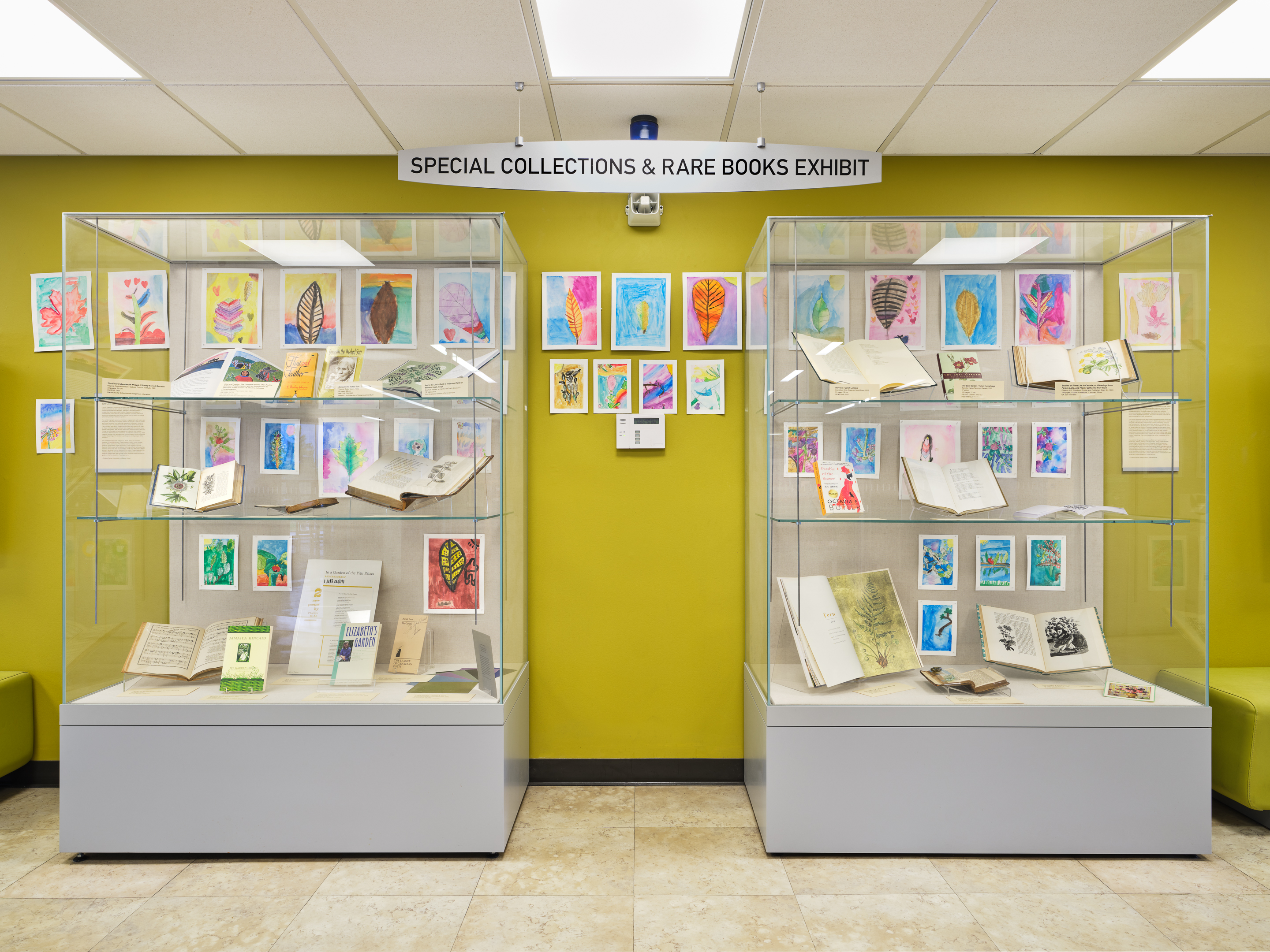
Oleksijczuk and Wiener have discussed their collaborative curatorial process and aims of the exhibition together for The Peak and the CJSF, and, on May 28th as part of the Celebration of 10 Years of the WPHP event, offered a curator's tour of the exhibition where they elaborated how the project mobilizes and helps make visible data in the WPHP database. Below, Wiener offers her reflections on their talk and how their project engages WPHP’s data on women’s contributions to botanical literatures.
Salena Wiener’s reflections:
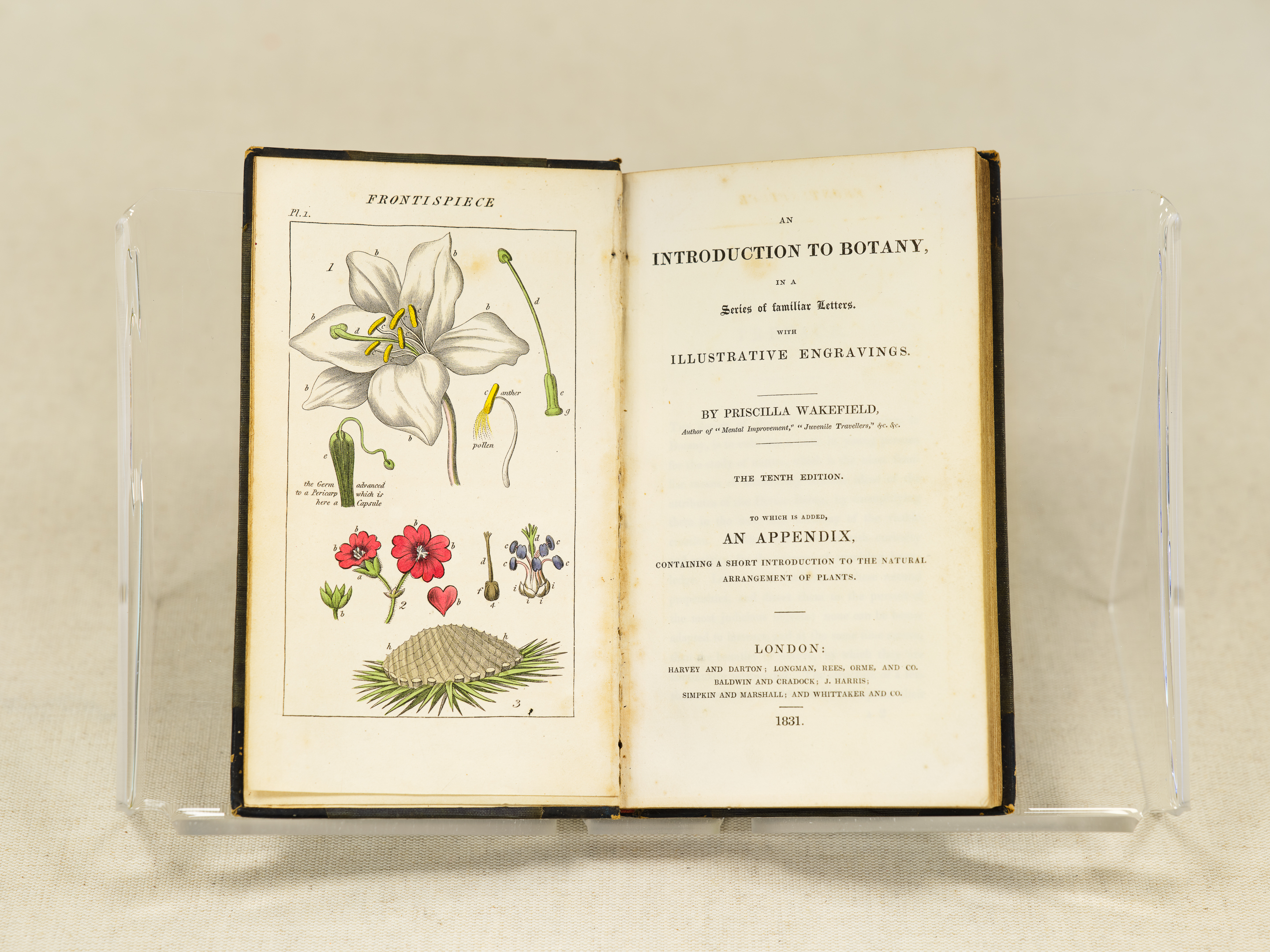
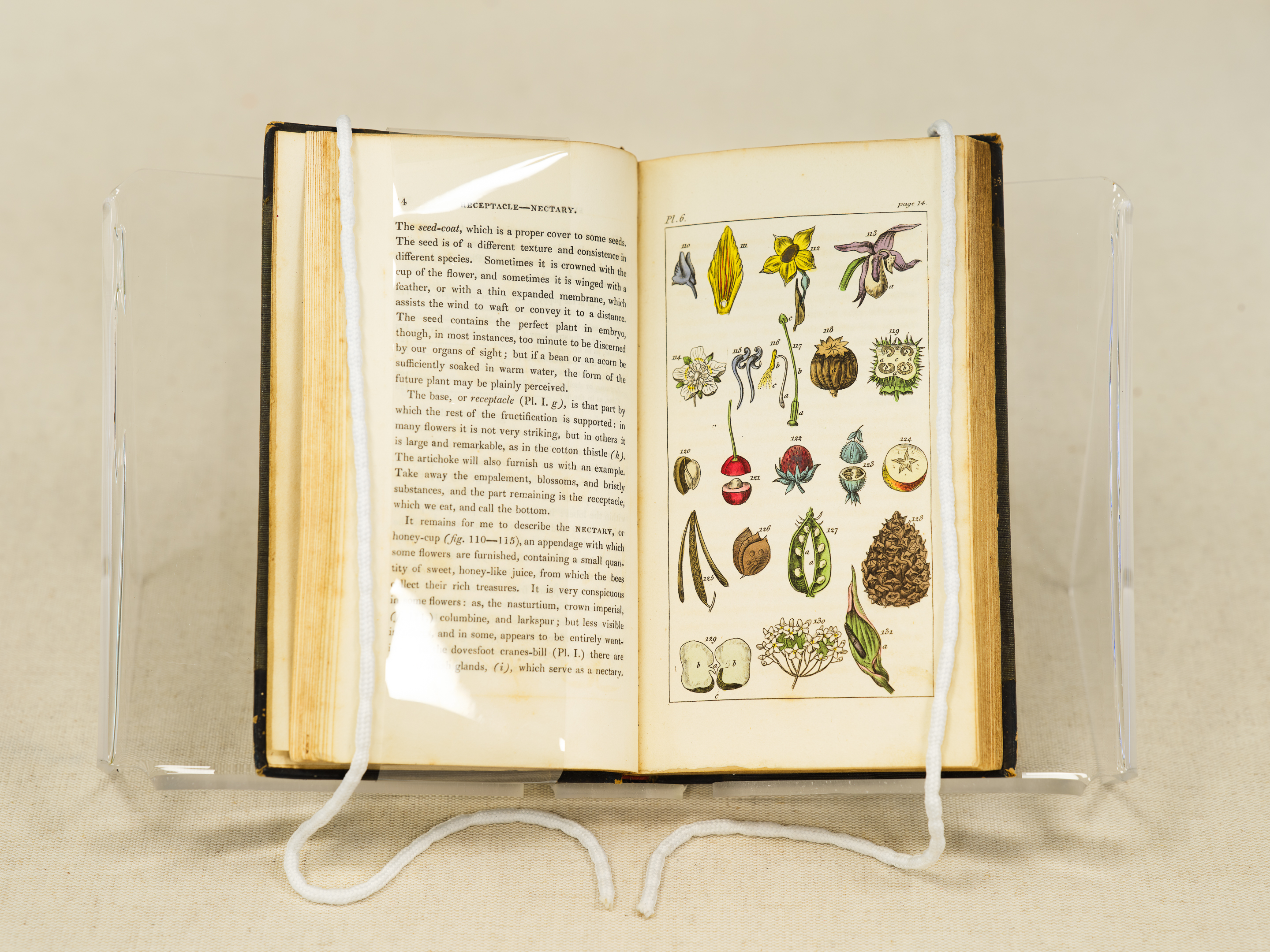
One of our aims for this exhibit was to make visible, in physical space, women’s contributions to botanical literatures as they appear in the WPHP database. Our research process was to cross reference which titles existed both in the WPHP and SFU’s Special Collections. What we found was that Priscilla Wakefield’s An Introduction to Botany (1796), the book which we were thinking of as a kind of hinge text, a text which brought many of our themes together, was found in the WPHP database but not in SFU’s Special Collections. Melissa Salrin, Head of Special Collections and Rare Books at SFU, was able to acquire a tenth edition, published in 1831, from Addyman Books in the UK, which we placed on display with its beautifully coloured illustrations (see figures 2 and 3). Wakefield’s book is an early example of botanical feminist literature; the book offers a simple introduction to plant science intended for women in particular to educate their daughters. Its inclusion in the exhibit, and now in SFU’s Special Collections, works to make these kinds of feminist interventions in the field of botanical literatures visible. Placing this eighteenth century text alongside more contemporary works shows women’s longstanding contributions to botanical education.
Another significant aspect of our curatorial process was to select books that would emphasize a canon of intersectional feminist botanical literatures. We chose authors like Connie Fife, Jamaica Kincaid, and Sherry Farrell Racette to highlight how Black, Indigenous, and queer women authors and artists often work against colonial and hetero-patriarchal narratives which have been imposed on the natural world. Through a diverse range of women authors featured, our exhibit sought to emphasize ways of being in nature (or being with nature through cultivation of the garden) which are reciprocal, over modes of domination.
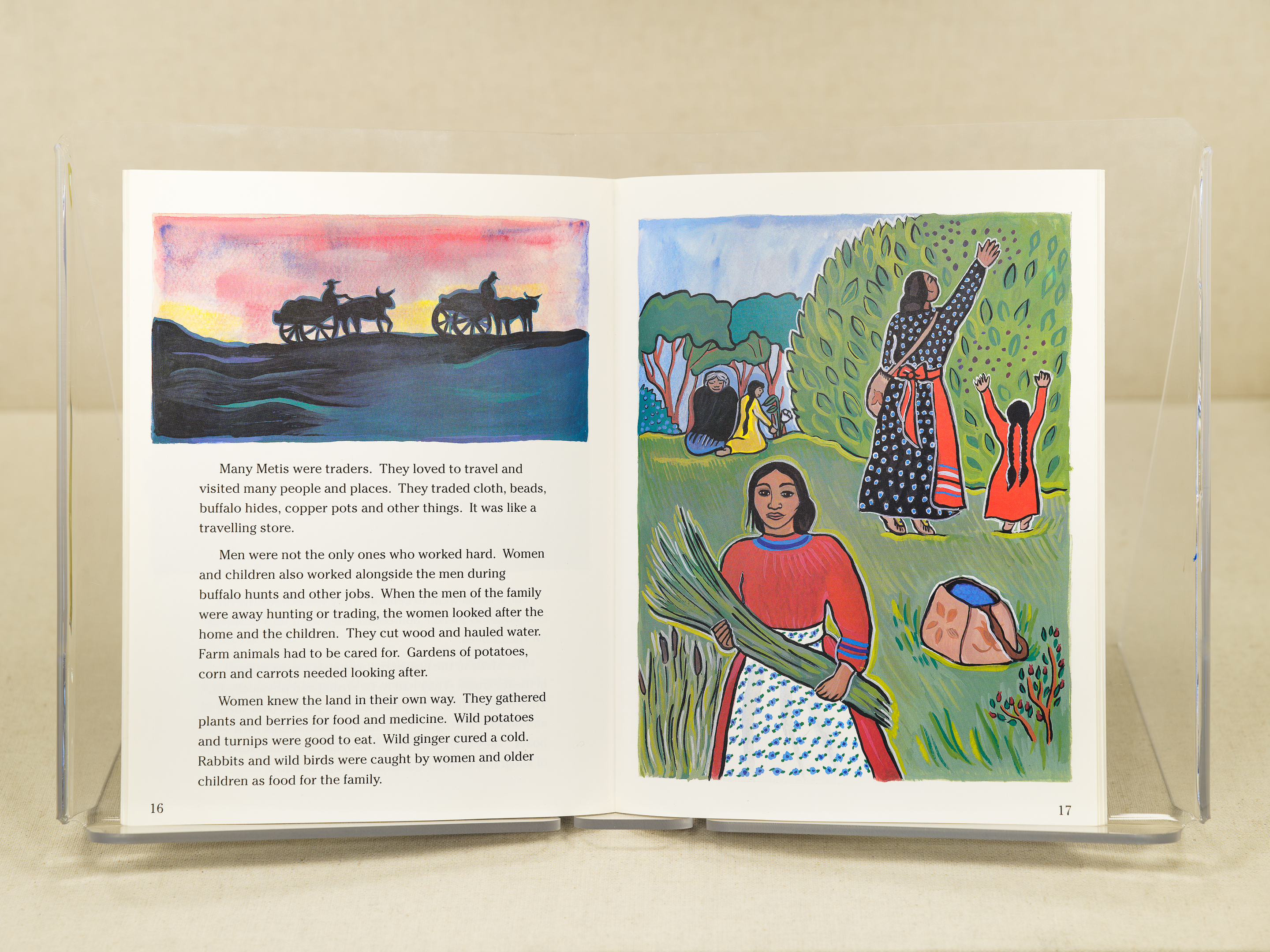
displaying illustrations depicting Métis women and children in the garden
Finally, as a visual exhibit, we wanted to select books that showed the multi-media texture of botanical literatures, which often included beautiful illustrations alongside their poetics or scientific descriptions. In our installation process, then, we displayed many of the books open with their flower or plant illustrations visible. We wanted the exhibit to integrate the books, their flowers, and the children’s paintings all together to resemble its own kind of garden space, bringing the natural world of plants into the library.
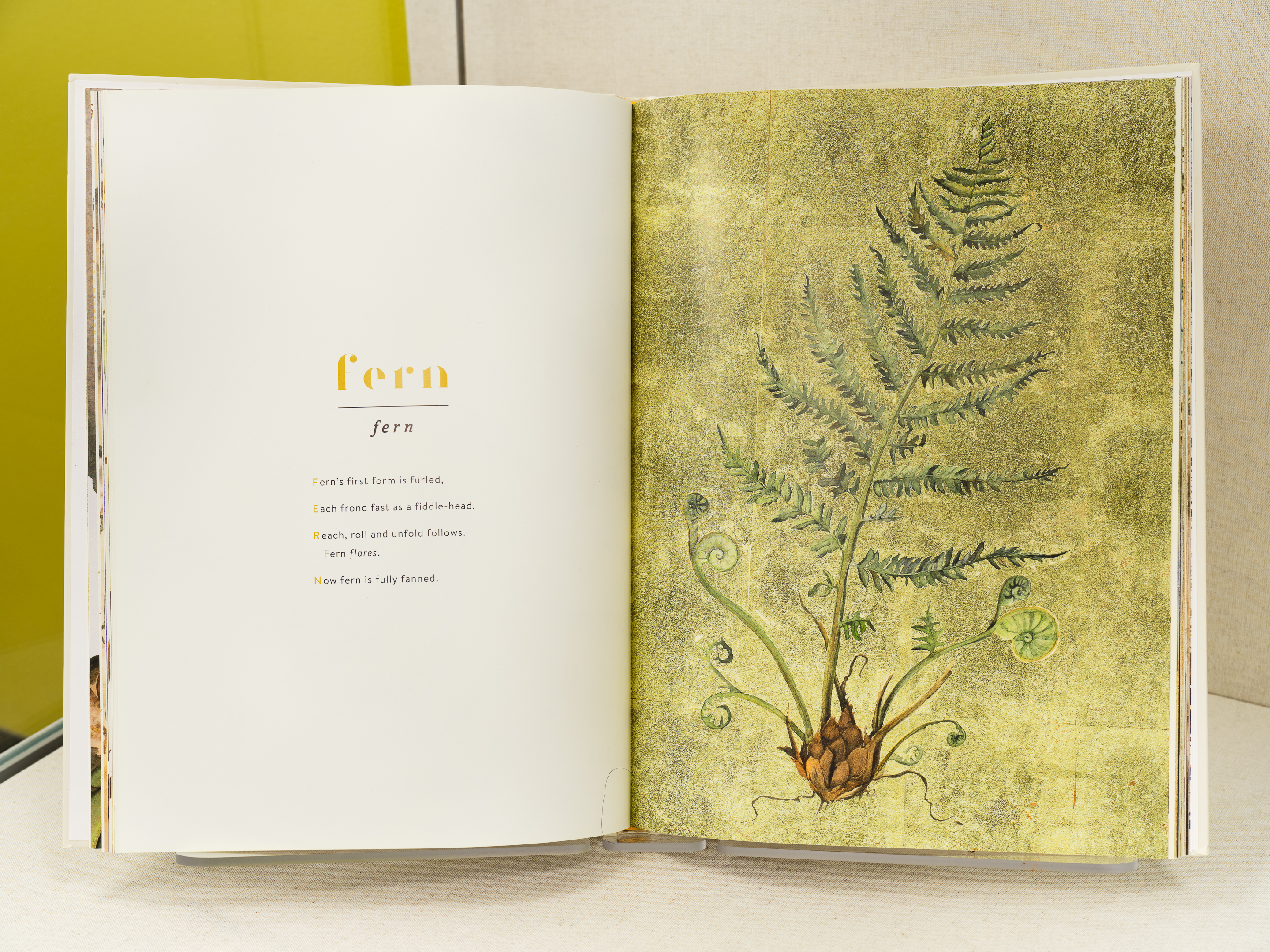
alongside Jackie Morris’ illustration of the anatomy of a fern
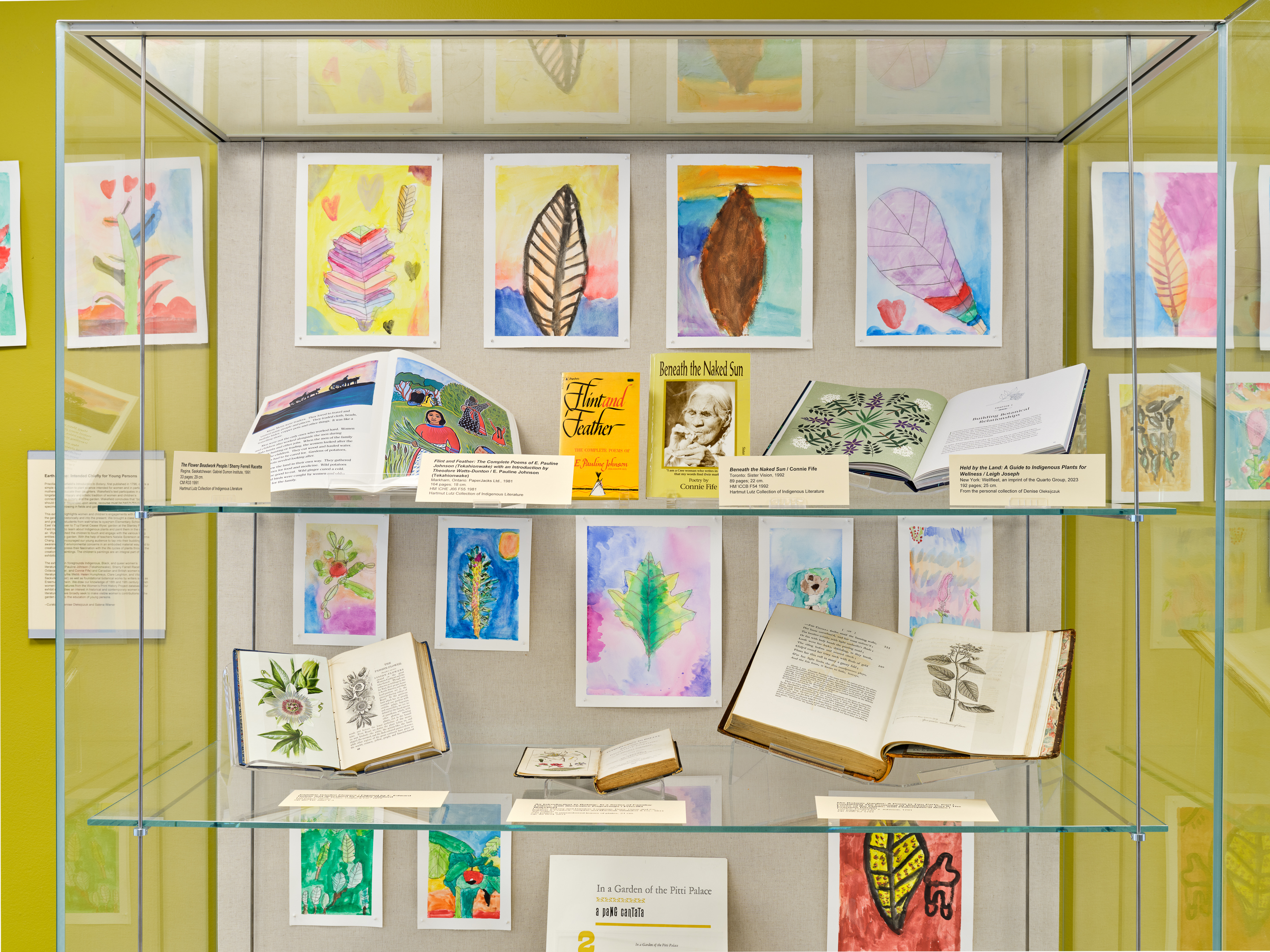
These books of plants already live in the archive, but in this exhibit we gave them new life by un-archiving them and giving them new form; we saw this public exhibit in the library as functioning as its own kind of garden ecology of women’s books and paintings of the little makers of the gardens of tomorrow.
Children are the future stewards of the earth in a climate crisis, so, in this exhibit we wanted to highlight our collective responsibility to them and to our future.
WPHP Records Referenced
An Introduction to Botany: in a series of familiar letters, with illustrative engravings. (title, first edition)
An Introduction to Botany: in a series of familiar letters, with illustrative engravings. (title, tenth edition)