This post is part of our Ten Years of the WPHP Spotlight Series, which will run through August 2026. In May 2026, the WPHP held two wrap events to celebrate over a decade of collaborative data creation and research, showcasing some of the projects that have emerged in the process. This series shares these projects along with further reflections from the creators and researchers.
Authored by: Amanda Law
Edited by: Kate Moffatt
Submitted on: 08/26/2026
Citation: Law, Amanda. "Women in Wikidata" The Women's Print History Project, 26 August 2026, https://womensprinthistoryproject.com/blog/post/158.
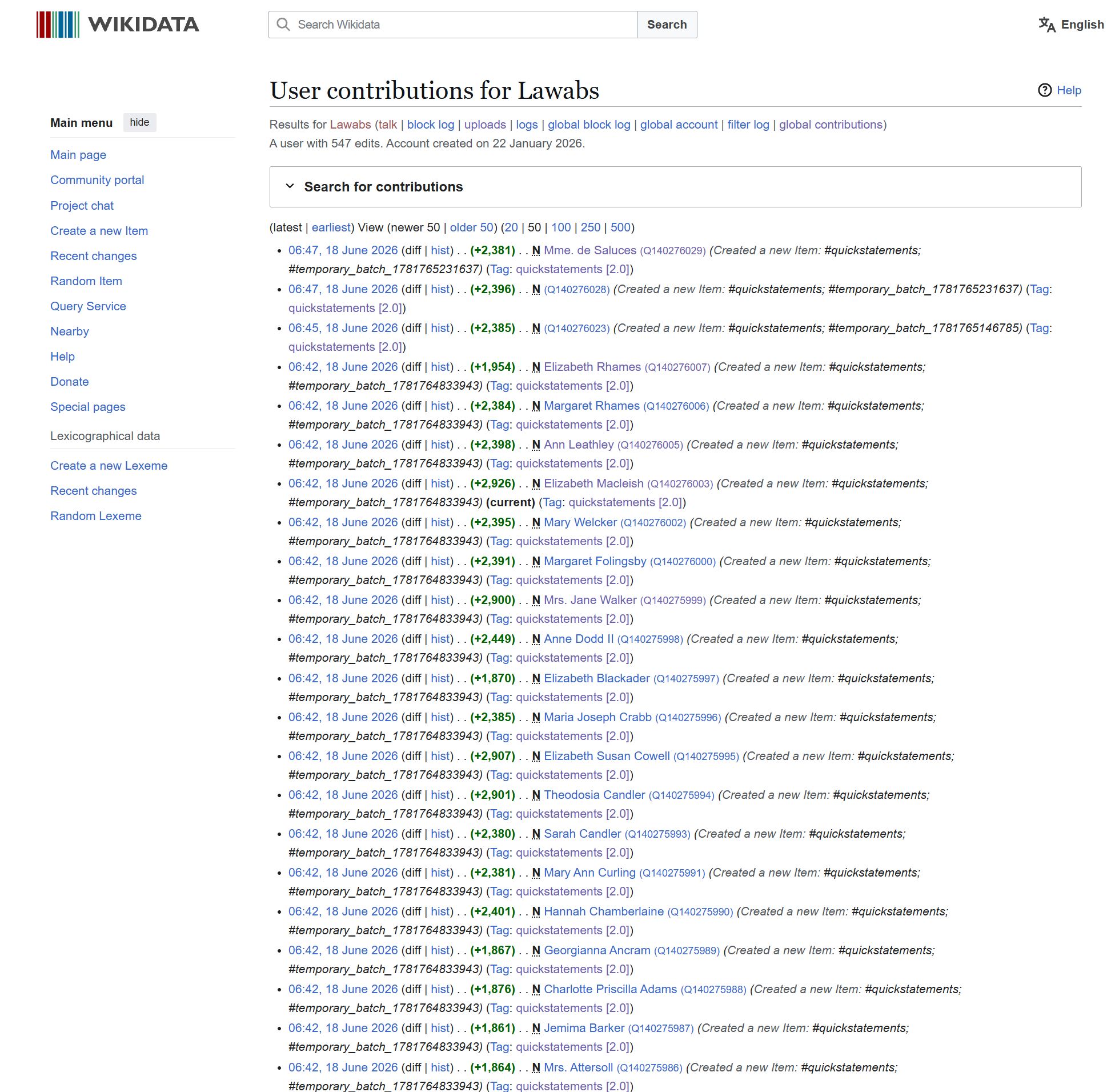
Figure 1. A screenshot of some of the women uploaded to Wikidata as part of the WPHP batch upload.
As part of the Breaking Barriers Interdisciplinary Incentive Grant, awarded by the Faculty of Arts and Social Sciences at SFU, the WPHP had the opportunity to collaborate with Dr. Hanlin Li and her Research Assistant Neeka Lin from the School of Information at the University of Texas Austin to work on adding data from the WPHP to Wikidata. During a preliminary review before the start of this project, we came to realize that generative AI programs were already pulling data from the WPHP. Wikidata was also already using WPHP Person IDs as External Identifiers for some of their Entities. In an effort to share our data more widely and to ensure its accuracy, as much as that is possible, we worked with Dr. Li and Neeka to test how we could batch upload WPHP data to Wikidata.
Our initial meetings involved understanding the overlap and conflicts between the fields and data models of Wikidata and WPHP, and determining which of our data made the most sense as a test batch. We narrowed our list to Persons who we have identified as women in The WPHP and for whom we've been able to link to VIAF (Virtual International Authority File) IDS. This first requirement allowed us to start filling in the gaps of women missing from Wikidata while the second ensured that each woman has a Reference, which Wikidata requires for some fields where the WPHP does not. For example, birth and death dates in Wikidata require a Reference, which is not explicitly captured in our WPHP Persons fields.
After settling on a sample set of women to upload to Wikidata, Neeka tested different Wikidata batch upload methods before deciding on a two-step process which involved filtering all of our Persons data (which we had in CSV format thanks to the Digital Humanities Innovation Lab at SFU) to our specific sample set through OpenRefine and then batch uploading to Wikidata through QuickStatements. Along with writing a Python script to convert the CSV data output from OpenRefine into text commands processed by QuickStatements, Neeka also wrote out a detailed but easy workflow for how to complete the whole process.
While this undertaking didn’t involve much manual work with the data, it did entail manually adding a Description for each Person, which is a requirement for new Entities created in Wikidata. Examples of Descriptions include “18th century British printer” (see Fig. 2) or “19th century French author.” In our WPHP Persons Records, we do not have a specific field to indicate the role that a Person occupied, as their attached Titles or Firms often reveal this information. Wikidata does have the feature of linking titles to Entities, but it is a much larger project to batch upload all 18552 of our Titles and attach them to the correct Entity. Not having a concrete description field for each Person in the WPHP allows our understanding of the roles they occupied to evolve as we uncover more Titles attached to their name. Many women in the period were not just authors or business owners, but both, and perhaps even more than our Contributor Roles can capture. A concrete description, as Wikidata has, does serve a purpose by helping us differentiate between people who have similar or incomplete recorded names, but our model accounts for more fluidity.
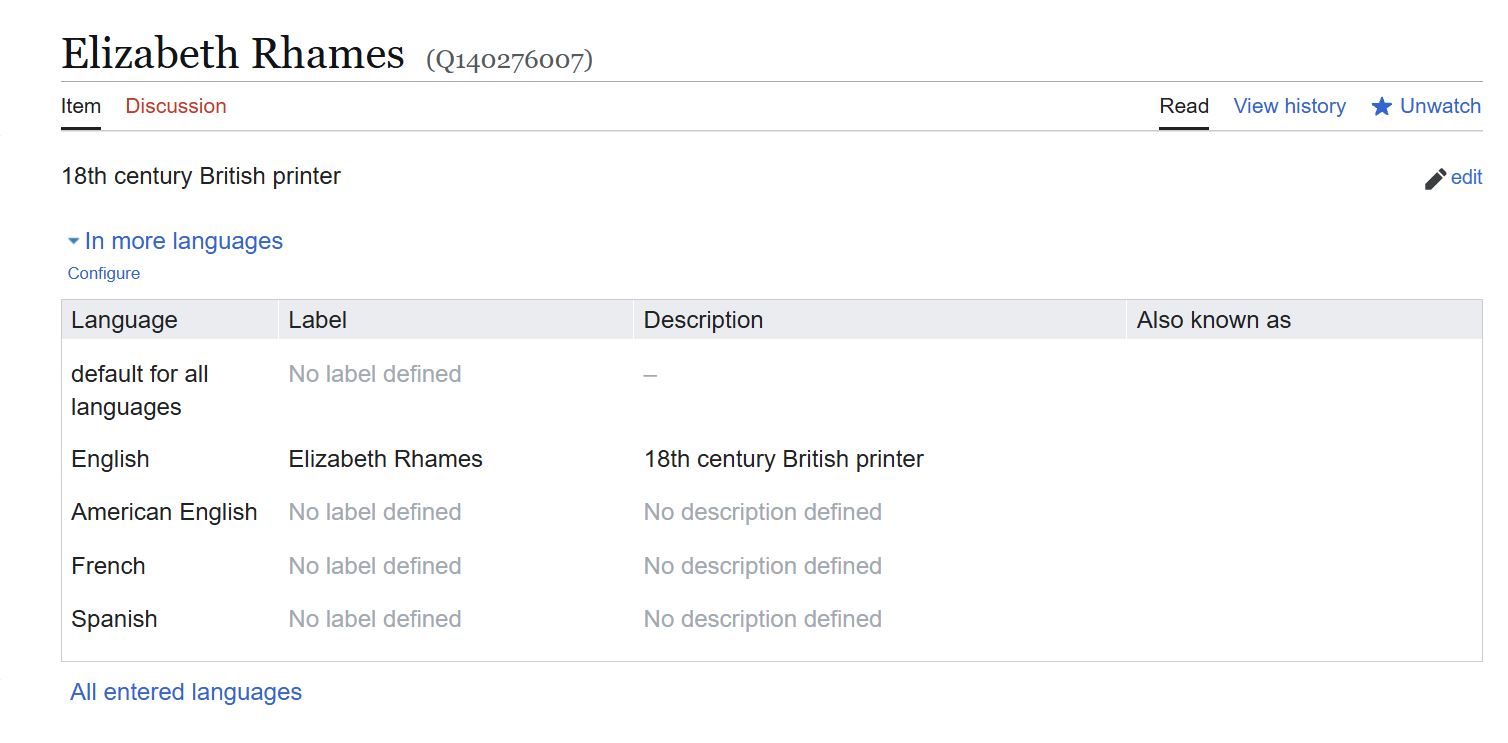 Figure 2. Elizabeth Rhames’s Wikidata page, including her Description
After some small hiccups navigating and learning Wikidata, OpenRefine, the Python script, and QuickStatements, I was able to upload 313 new women to Wikidata. Some of these women have as little as only a last name or initial and a single title attached to them in the WPHP, but through this process of uploading them to Wikidata, we are able to share their information more widely for people to access and add to in the future. As extensively as the WPHP team searches for this information, we are limited by a number of factors, especially as we wind down active work on the database. Sharing this data on sites like Wikidata opens up possibilities for other researchers to contribute to this data and to continue the search for information on hundreds of hidden and underrepresented women in the book trades.
WPHP Records Referenced
Persons (table)
Titles (table)
Firms (table)
Contributor Roles (Spotlight)
Elizabeth Rhames (person)